
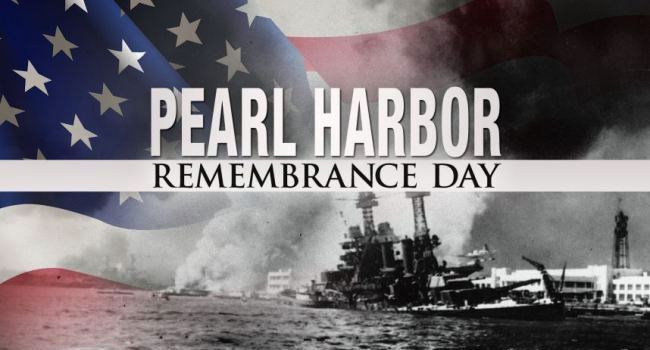
Today is Pearl Harbor Remembrance Day, December 7, a day set aside to remember the “day that will live in infamy,” as President Franklin D. Roosevelt said in his radio address to our shaken country on December 7, 1941. The next day, a unified Congress did not debate or hesitate declaring war on the Empire of Japan in response to the surprise attack on the U.S. Naval Fleet at Pearl Harbor, Hawaii.
The United States officially entered World War II. Old men and young boys flocked to recruiting stations to join up to defend this great country. Draft boards sprang into action. Civil Defense units sprang to life in every small town in America. Flags and red, white and blue bunting were displayed in windows, on porches and at businesses wherever possible.
Pearl Harbor was America’s first wake-up call, our country’s original 9/11 emotional reset.
Unfortunately, Pearl Harbor Day has faded from our American freedom lexicon, the same as Lexington and Concord and Remember the Alamo. With very few World War II veterans remaining with us, the stories of the Great War and the first-hand memories of living through or feeling the impact of Pearl Harbor in person are slipping into the mist.
The noise of political correctness should never out-shout the high pitch of patriotism — not on the streets or in the American history classroom. Students at school and children at home need to hear the stories repeated and understand what Pearl Harbor Day represents and means to the United States.
Pearl Harbor Day led to one of the last great soldiers marching win-at-all-costs wars. It was fought in the days before satellites and guided missiles. It took masses of men, guns and ground movements. Those old men and young boys that volunteered and answered the call of their draft boards, they saved the free world.
Our responsible society today cannot let this memory slip away. The ancient veterans still with us, the undaunted ones wearing American Legion or VFW hats saluting the flag with deformed knuckles, some in wheelchairs wrapped in blankets, respect them with all your might. They know the privilege of freedom. They remember the burning uncertainty of tyranny at the doorstep. They understand the sacrifice.
Explain to the students, to the children, that in this image, in that generation, there is the wellspring of modern patriotism as we know it in America.