
Will be open for business, but only at 25% capacity.
Free soda refills may end up being another casualty of the pandemic, as businesses try to figure out what the new normal looks like ahead of the first phase to reopen the state’s economy.
At Moe’s Southwest Grill on U.S. Highway 90 in Lake City, workers are bracing to resume dine-in service when Florida lifts some quarantine restrictions Monday. But not everything will be back to the way it was, at least not right away, the restaurant’s management says.
Customers likely won’t be able to get their drinks topped off, said the local franchise’s marketing chief, Ferne Mann, whose son owns the business. The self-serve salsa bar is also slated to instead be stocked with pre-filled containers.
“We’re trying to take away the touch points,” Mann said, taking an apologetic tone. “It’s sad, and we don’t like it at all.”
Restaurants, which have gotten used to only being allowed to offer takeout or delivery options, will be once again able to seat customers inside the premises, but only at 25 percent of their normal capacity, according to Gov. Ron DeSantis’ rules of reopening.
Employees don’t count toward the limit, according to the governor’s office.
For the local Moe’s franchise, that means about 22 customers can be inside the building, said owner Robert Mann, Ferne’s son.
“It wouldn’t feel very normal, and people would probably get mad if they come in and all the seats are taken,” he said.
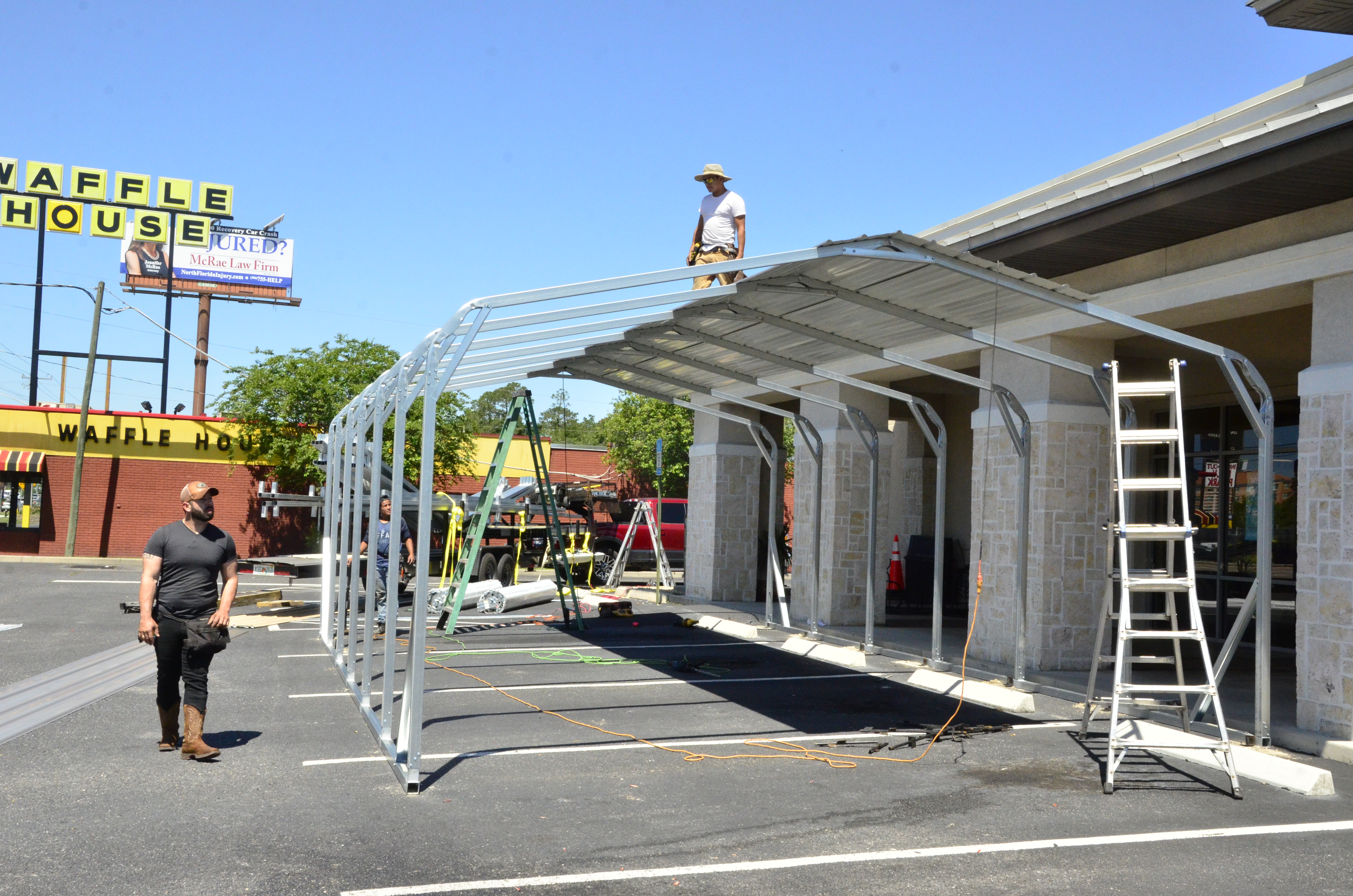
To prevent that from happening, the franchise on Friday was constructing a shed adjacent to the building to house additional patrons, a move expected to bring the capacity back up to the pre-pandemic level.
“The community has been great to us so far, they’ve really supported Moe’s during this time,” Robert Mann said. “And I hope they can have great service and normalization through the extra seating we’re providing.”
In addition to the limited capacity, restaurants will still have to abide by the six-foot rule.
Phish Tales, a popular local eatery off Southwest Main Boulevard, spent much of Friday trying to prepare for a reopening on Tuesday rather than Monday, when the restaurant is normally closed.
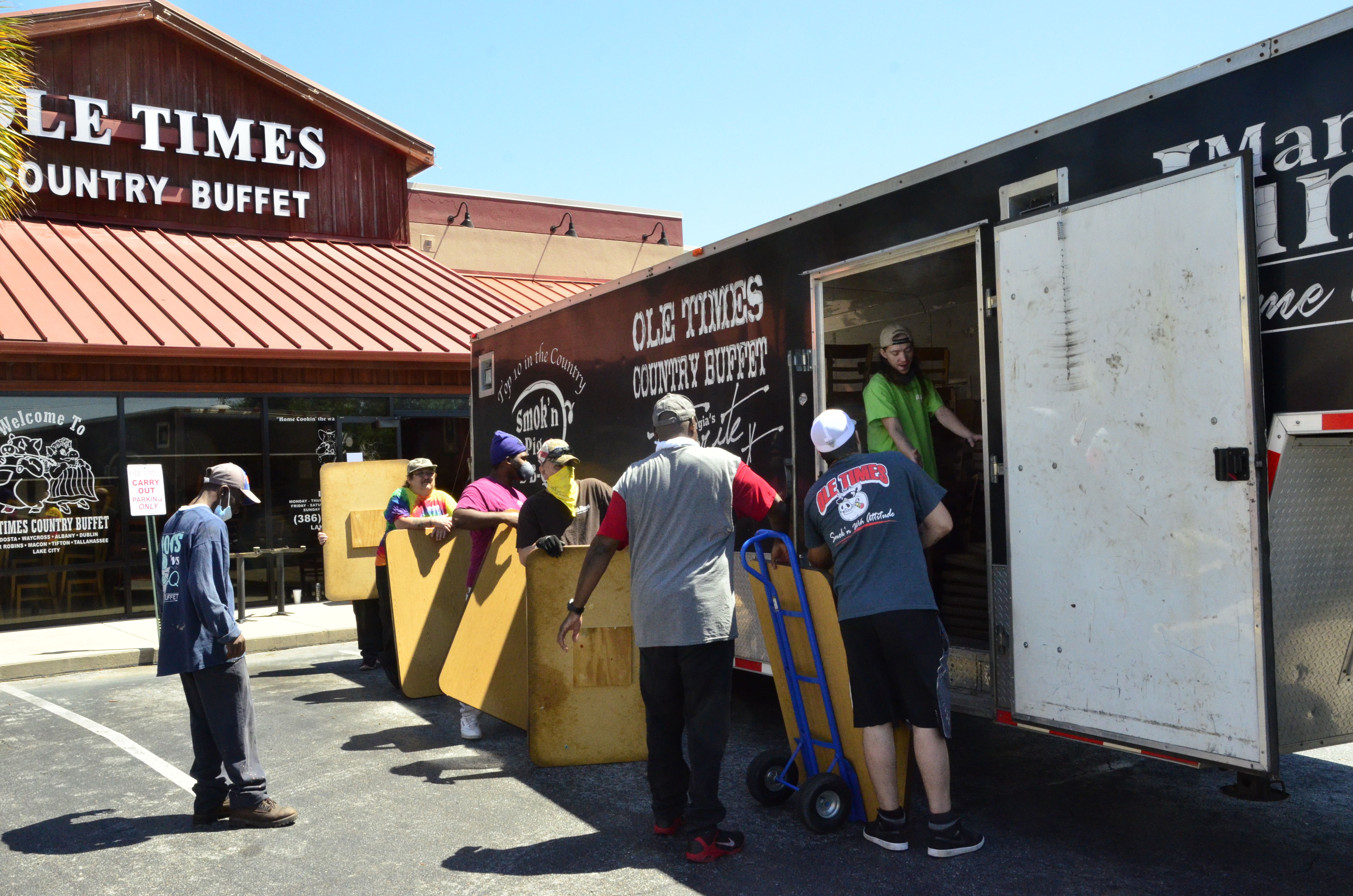
“We gotta do maps, count seats, move tables, hide chairs — all kinds of fun stuff,” said co-owner Philip Crenshaw.
The restaurant has gotten the hang of being a takeout-only establishment, Crenshaw said. It hasn’t been an ideal situation, he said, but the business at least finally came to understand what is and isn’t allowed.
With this, there’s a whole new set of rules to study, Crenshaw said.
“It’s a very nebulous thing going on,” he said.
For instance, Crenshaw didn’t know as of Friday whether it would still be legal to sell alcoholic beverages to go, a concession the state granted to restaurants to ease the burden of the economic shutdown.
Outdoor seating will be allowed under the new guidelines, but Crenshaw wasn’t sure whether that only applies to restaurants with existing areas for that purpose.
“So I’m going to put tables in the parking lot, as long as they’re 10 feet apart, and I’m going to do it until someone tells me I can’t,” Crenshaw said.
Staffing is also an issue in the leadup to Florida’s reopening, Crenshaw said.
Hours have been reduced under the current stay-at-home mandate, and some employees voluntarily took time off out of safety concerns, he said.
“I’m running with two people in the front and two people in the back instead of the usual five and five,” he said.
But just because the law allows the restaurant to resume limited dine-in service doesn’t mean business will suddenly return to normal. It’ll take time to catch up, Crenshaw said, but it’s not clear how long that will be.
“We’re gonna unlock the door and see what happens,” he said.