
Legislators warned of potential ‘Save our Homes’ lawsuit.
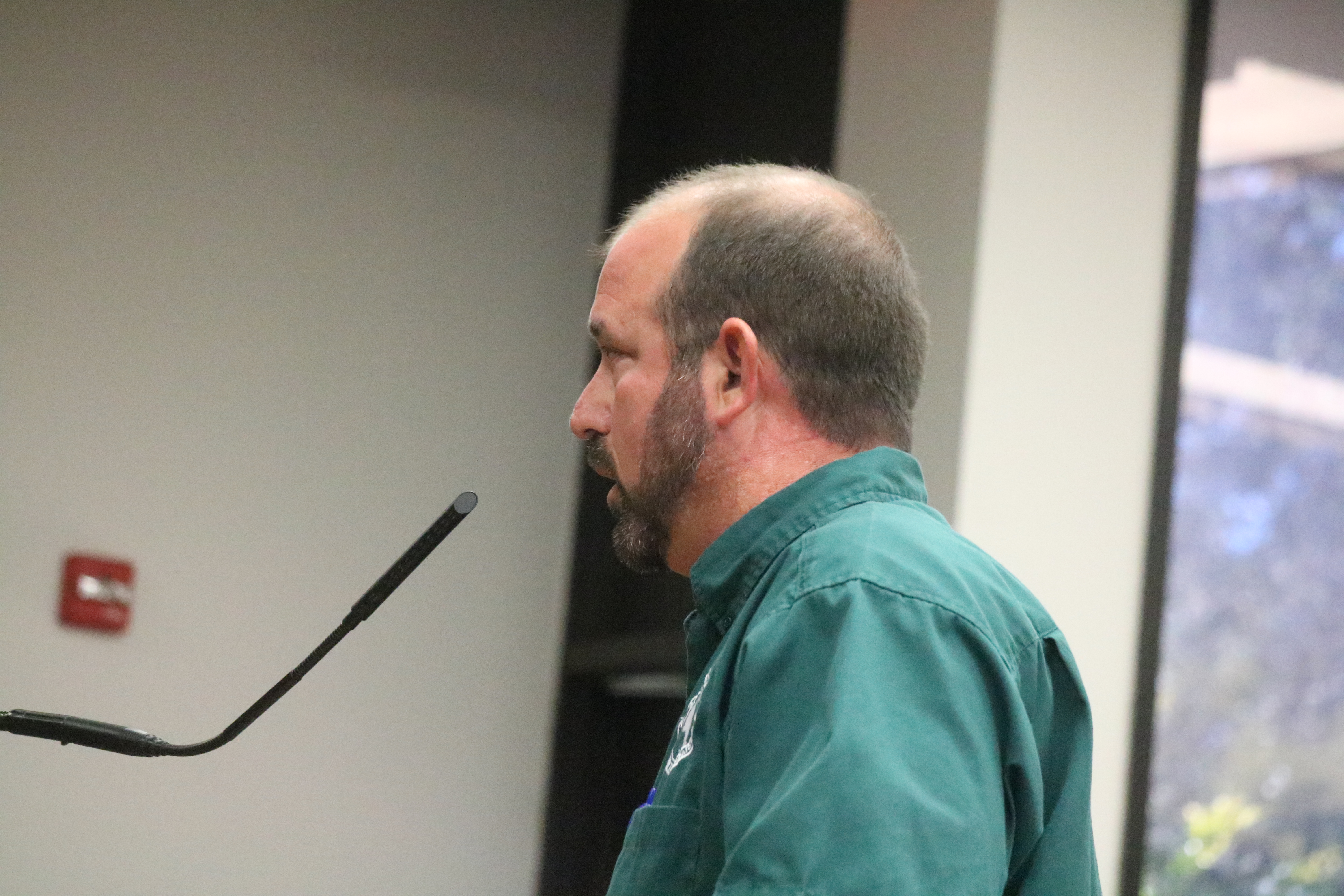
LIVE OAK — It really wasn’t a request made of Suwannee County’s state legislators.
Rather, Property Appraiser Ricky Gamble just wanted to give Sen. Jennifer Bradley (R-Fleming Island) and Rep. Chuck Brannan (R-Macclenny) a heads up. Gamble, who was elected to the position last year, told Bradley and Brannan at Tuesday morning’s legislative delegation hearing at Live Oak City Hall, that they may soon see a lawsuit filed by his office against the state’s Department of Revenue.
“If y’all see a lawsuit against Suwannee County and the Department of Revenue, you know what it is,” Gamble said, adding he included a lawsuit against the department as part of his budget that the department signed off on. “Or if you have any pull with the department and convince them to back off this.
“We’re not doing it.”
What Gamble wants the Department of Revenue to back off is a change in how it interprets and calculates the “Save our Homes” homestead exemption that was adopted and implemented in 1994.
Rather than allow up to 160 acres of a farm for the homestead exemption as is described in the Florida Constitution, the Department of Revenue determined with the “Save our Homes” exemption that the homestead would only apply to the house and the one acre of land that it sat on.
The rest of the farm would only qualify for the ag exemption.
After a pushback from property appraisers in the early 1990s, the Department of Revenue allowed counties to determine how they wanted to apply it. About half the state, including Suwannee County, have provided a homestead carryover to the rest of the property.
“In many small counties, a homestead wasn’t enough value to capture the complete exemption,” Gamble explained, particularly if the farm house was an older home or, in some cases, a single-wide mobile home.
So instead of getting the entire $25,000 exemption, those taxpayers would see reduced amounts.
In Gamble’s estimation, it will likely mean a tax increase of $300 or more for some landowners — more than 1,000 in fact.
“I don’t believe that was the intent of the ‘Save our Homestead,’” Gamble said, adding he asked the Department of Revenue if they would allow him to do something illegal to get around the new implementation of the rule, to which he was told no.
“I said, ‘Well, you’ve been knowingly allowing us to do it for 30 years.”
Last year was the first year the Department of Revenue expected the change, although it wasn’t mandatory. That’s no longer the case.
If Gamble doesn’t comply, the state could deny Suwannee County’s tax roll.
“That’s another mess, but we’re going to fight them on it,” Gamble said, adding he’s talked with a number of other property appraisers in north Florida and there is a group of 10-12 that are willing to fight against the change, which mostly impacts those rural counties as home and property values have skyrocketed in other areas of the state.
Bradley said she was not aware of the change, thanking Gamble for bringing it to their attention as she will examine the problem.
Brannan, too, thanked Gamble.
“You’re brand new at the job, but I commend you for taking it on,” he said.
Gamble said his time in office doesn’t matter.
“Right’s right and wrong’s wrong and I’m not going to let them step on us,” he said, adding one Department of Revenue employee said a farm is a business.
Gamble agreed that it is, but that it is also more.
“A farm is a homestead,” he said. “They live on that farm. For most of them, they live, work and die on that farm. It’s a business but it’s their home.”
TEACHER PAY
Both Ted Roush, the superintendent of Suwannee County Schools, and Eric Rodriguez, the president of the United Teachers of Suwannee County, thanked the legislators for their work in raising the starting pay for teachers.
However, both also requested help in addressing a new problem caused by that issue: salary compression.
Rodriguez said the salary difference in Suwannee County now for a first year teacher and one with 14 years of experience is just $1,000.
“That’s a problem,” he said. “It creates morale issues and it’s just not fair.”
Brannan and Bradley both said it’s an issue they will continue to work on, but that fixing the problem had to start somewhere.
“Would you have rather us not at all raise starting teacher pay?” Brannan asked Rodriguez, who pointed out the state’s average teacher pay is 48th in the country. “I mean if I give you a gold brick, are you going to complain how heavy it is?
“One step at a time, as long as we’re moving forward and raising teacher pay…We’ll keep working on it.”
Roush added that teachers account for less than half of the employees within the Suwannee County School District, meaning that starting pay boost doesn’t address all of the problems the district faces in trying to adequately compensate its employees.
Roush also added that the base student allocation increase actually didn’t benefit the districts, once teacher pay, transportation costs and other increases were taken out.
“We’re actually backwards about $1.3 million from where we were the previous fiscal year when you take in those factors,” he said.