
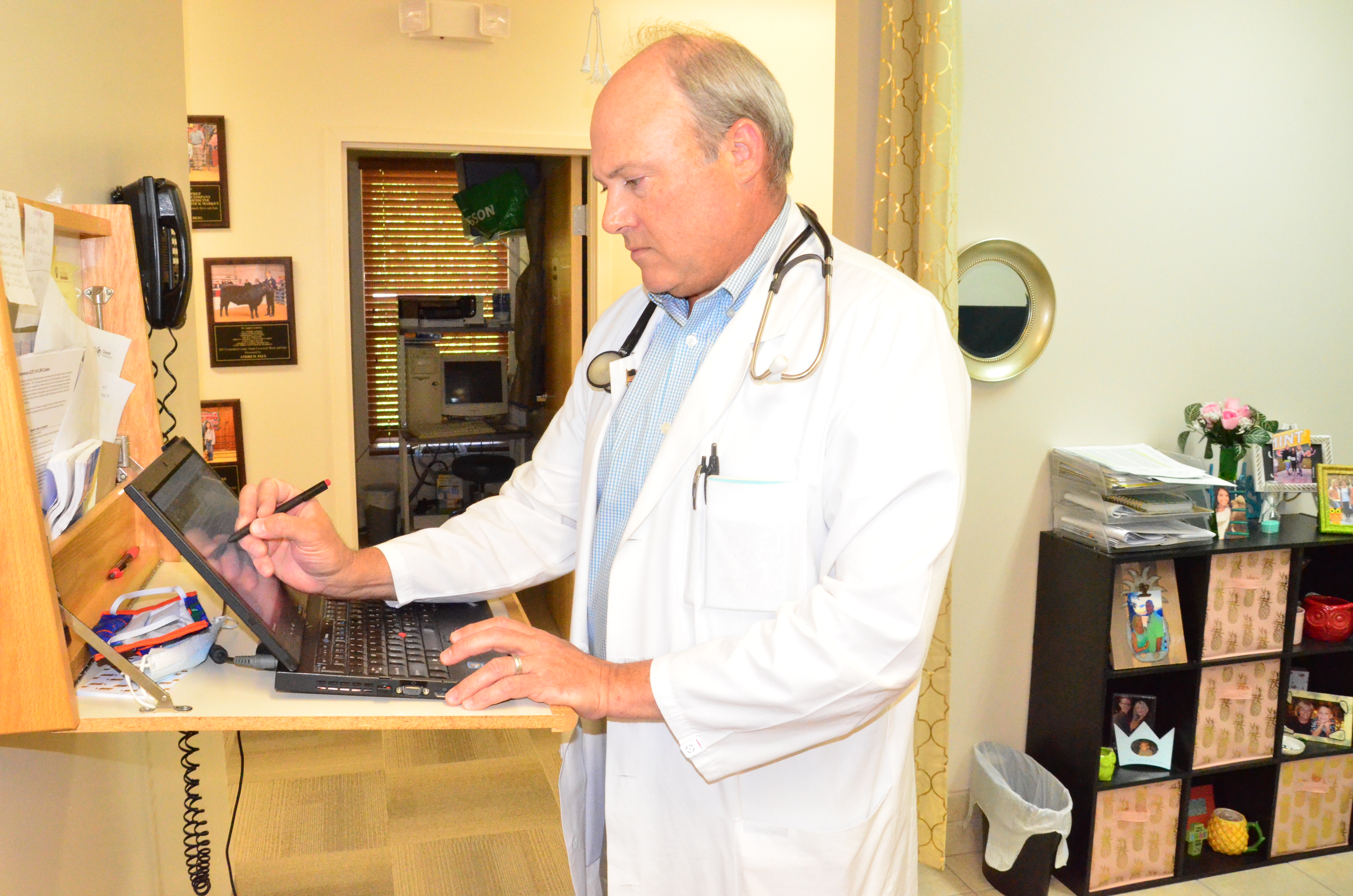
Family doctors are used to treating pain, now they’re feeling it.
When the governor enacted a statewide stay-at-home order at the start of April, Peter Giebeig of Giebeig Family Medicine started getting a flood of requests to cancel appointments that same week.
The situation isn’t unique to his business.Though healthcare providers are exempt from the shutdown, general practitioners all over are dealing with reluctance from patients about coming in for a check up, Giebeig said.
“They don’t want to come into a waiting room and sit beside someone who is sick,” he said.
Giebeig’s practice, which he founded in 1999, typically sees up to 250 patients a week. It’s been about half that since Florida put the quarantine rules into effect.
“In family practice, you do routine follow-ups, and none of that is per se urgent,” he said. “So it’s common for people to put it off for a month or two.”
The office explains to patients how it is taking precautions and following the best practices recommended by medical experts. There’s a limit to the number of people allowed inside the building, and “X” markers on the floor demonstrate the six-foot social distancing guideline set forth by the Centers for Disease Control.
Most of his patients say they’re actually comfortable with the environment in the office itself, Giebeig said. The main hangup is when they have to go to a lab prior to an appointment.
“I’m not sure why — the lab is actually one of the cleaner places there is,” he said.
A broader issue Giebeig mentioned is “media reports causing patients to stress out.”
“And they cause my employees to stress out because of the panic,” he said. “Or the perceived panic.”
Giebeig’s practice would be facing a much grimmer prognosis were it not for federal relief provided through the Small Business Administration.
He was approved to receive funds from the paycheck protection program, part of a bipartisan response to the coronavirus. The money won’t have to be paid back, so long as the business keeps its 10 employees on the payroll.
“It gives us some revenue to pay employees for the next eight weeks,” Giebeig said.
Funding from a Medicare stimulus package is also incoming, he said.
Layoffs have been avoided so far, but shifts have been cut by about five hours per week, Giebeig said Wednesday afternoon.
“There’s just no reason to sit around and do nothing if you don’t have any patients,” he said.
Mornings are still relatively busy.
“It’s our afternoons that are scant as far as our patient load,” Giebeig said.
Giebeig started dabbling in telemedicine after the rules pertaining to virtual appointments were relaxed in response to the pandemic.
“For the right things, it’s OK,” he said. “But there are some times you have to lay hands on the patient to know what’s going on.”
Not many of his patients use Skype or other video chat applications, Giebeig said, so the telemedicine route hasn’t done much to boost business.
Without the federal relief money, Giebeig said his practice could go on another four to six weeks without having to cut down on staff.
“But I don’t think this is going to drag on,” he said. “As things start to open back up, people are going to feel more comfortable getting out.”
Giebeig believes the country is turning a corner on the pandemic.
“I think we’ve seen a flattening of the curve,” he said. “I think it’s really time to get especially the people that are of low risk back to work.”