
Only full board can make that decision, says Joel Foreman.
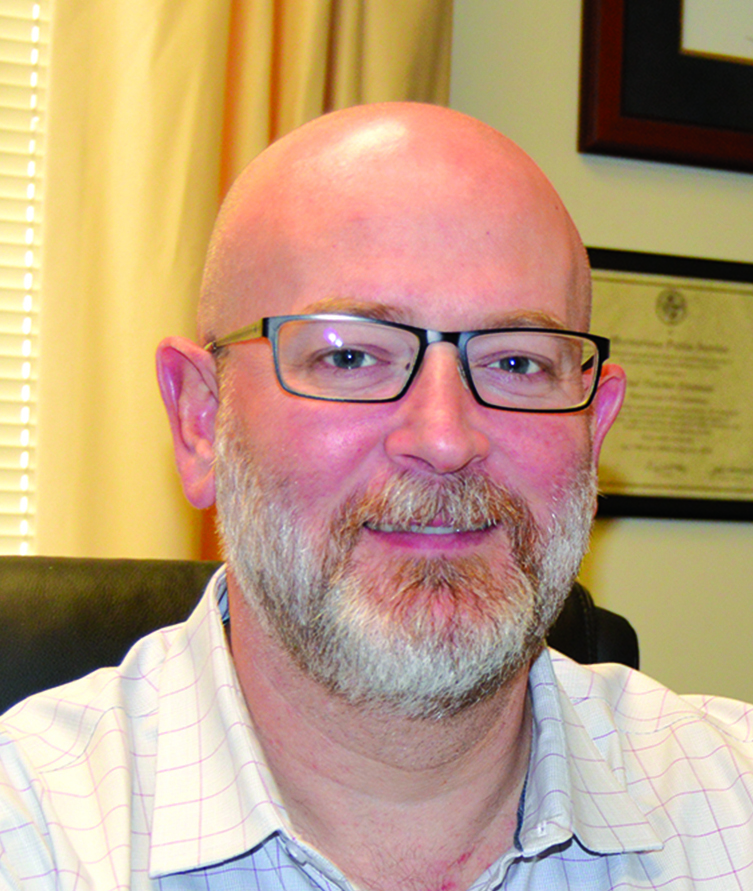
Foreman
The in-house attorney for the county’s Charter Review Commission, sidelined earlier this year in favor of outside counsel, says he’s been fully relieved of his duties as a result of a decision made without proper authorization.
The CRC chairman, Robert Lane, disputed the notion that the board had fired its lead attorney, Joel Foreman. When presented with a memo from Foreman indicating otherwise, Lane declined to explain the apparent contradiction.
Foreman is the elected attorney serving the county’s general legislative body, the Board of County Commissioners, which empanels the CRC once every eight years to draft recommendations for updating the county charter. By default, Foreman was the CRC’s chief legal counsel, but the charter board opted early in the process to supplement him with another attorney, Lynn Hoshihara of the Tallahassee law firm Nabors Giblin & Nickerson.
CRC members are appointed by the County Commission, but are meant to be otherwise independent from other officials. For that reason, the charter board sought Hoshihara to handle matters that involve a declared conflict of interest on Foreman’s part.
In a phone interview Tuesday, Lane reiterated that Hoshihara was hired only for that specific scope of work, insisting Foreman still represented the CRC. When asked to comment on reports that Foreman had been given the boot entirely, Lane responded, “no, no, no.”
“I don’t know who has been spreading that,” Lane said.
Foreman confirmed his removal later the same day.
Tuesday afternoon, Foreman released a memo addressing his removal from the CRC, which came as he was coordinating the board’s schedule during a crucial time crunch brought about by the covid-19 pandemic.
“Ladies and Gentlemen — Clarifications are in order,” the memo begins.
Hoshihara was hired by the CRC for legal and consulting services on specific issues Foreman was likely to declare a conflict over, the memo reiterates.
“I was neither asked about any specific emerging ‘conflict’ issues, nor was I asked whether I was of the opinion that any conflict existed or might come to exist that would preclude my continuing to facilitate the CRC’s business going forward,” Foreman wrote. “In short, I have not declared a ‘conflict’ to exist
As of April 6, Foreman was still conducting himself as if he were the charter board’s lead attorney, according to the memo. He was attempting to organize a virtual meeting after social distancing measures were enacted.
By that time, Foreman wrote, Lane had already instructed Hoshihara to take over the job of coordinating meetings and a “host of other matters” described in an April 3 email between the chairman and the outside counsel.
Hoshihara had effectively become the lead counsel, according to the memo.
On April 7, four days after Lane sent the email to Hoshihara, Foreman was notified for the first time that he was no longer charged with coordinating CRC meetings, the memo states.
Foreman reached out to Hoshihara and the chairs of the CRC operations and finance subcommittees to relay details of the work he had in progress at the time. They didn’t respond.
“I have since had no role in coordinating meetings for the CRC save for offering bits of advice to Ms. Hoshihara about who to contact at the County offices,” Foreman wrote.
Foreman wrote that he has no intention of being a “distraction” or a “crutch” for the CRC and would have no issues leaving the position if that were the pleasure of the charter board. However, Foreman added, the CRC chair cannot make that decision alone.
“As the chair is without authority to end my service to the CRC, I must request that the issue be placed before the CRC for action,” Foreman wrote. “I am in no way lobbying to remain in the job, but for clarity and as a matter of sound governance it is important for the [Charter Review] Commission to act through a quorum of its appointed membership at a public meeting, just as is expected of the Board of County Commissioners.”
In a followup phone interview Tuesday, Lane declined to comment on Foreman’s memo or clarify his earlier statement.
“I’m just going to wait for the meeting and let it be settled there,” Lane said.
The CRC is tasked with recommended revisions to the charter, but the final say is in the voters’ hands. Time is of the essence.
In order to get a recommendation onto the November ballot for approval, the CRC must hold three public hearings, which must be at least 10 days apart. Due to the timeframe for the election, the absolute latest the first hearing could be held is May 26, Foreman wrote in an email.
There are 15 appointed members on the charter board, meaning a public hearing would violate quarantine rules set in place by the state.
Unlike a regular meeting, it’s not entirely settled whether public hearings can be held virtually, Foreman wrote, but he believes the law likely requires them to be conducted in person.
“I’m under the opinion that a public hearing under the charter is an in-person hearing,” Foreman wrote.
It will be the CRC’s call whether to attempt a virtual meeting.
Lane said he hopes the quarantine restrictions will be lifted by mid-May, allowing the board to resume normal meetings. Otherwise, further research will be required on the legality of meeting via teleconference, Lane said.
“It’s kind of like a wait-and-see game,” he said.
The CRC has a virtual meeting set for 6 p.m. Thursday. It can be viewed at www.columbiacountyfla.com/watch/.