
Outdoor burning is again banned in Columbia County.
Following the recommendation from Columbia County Fire Chief Jeff Crawford, the Columbia County Commission unanimously approved reinstating a burn ban at its meeting Thursday night. The ban went into effect immediately and will remain in place at least until the board’s next meeting, May 7.
“Forestry is having to drop several plows on just about every fire around now, using air tankers and all,” Crawford said. “I/m just asking we reinstate the burn ban.”
The board had previously implemented the burn ban on Feb. 5 due to the ongoing drought across Florida. However, it removed the ban while still urging extreme caution on March 19 after a few rain events helped improve conditions slightly.
The burn ban resolution states that all outdoor burning of yard trash, household paper products, bonfires, campfires, warming fires, outdoor fireplaces, chimneys and cooking fires in the county are prohibited unless they are approved by the Florida Forest Service or the cooking fires are done within a contained grill.
The resolution also said that setting fire to any grass, brush or forest-covered land without approval of the FFS violates the county’s laws.
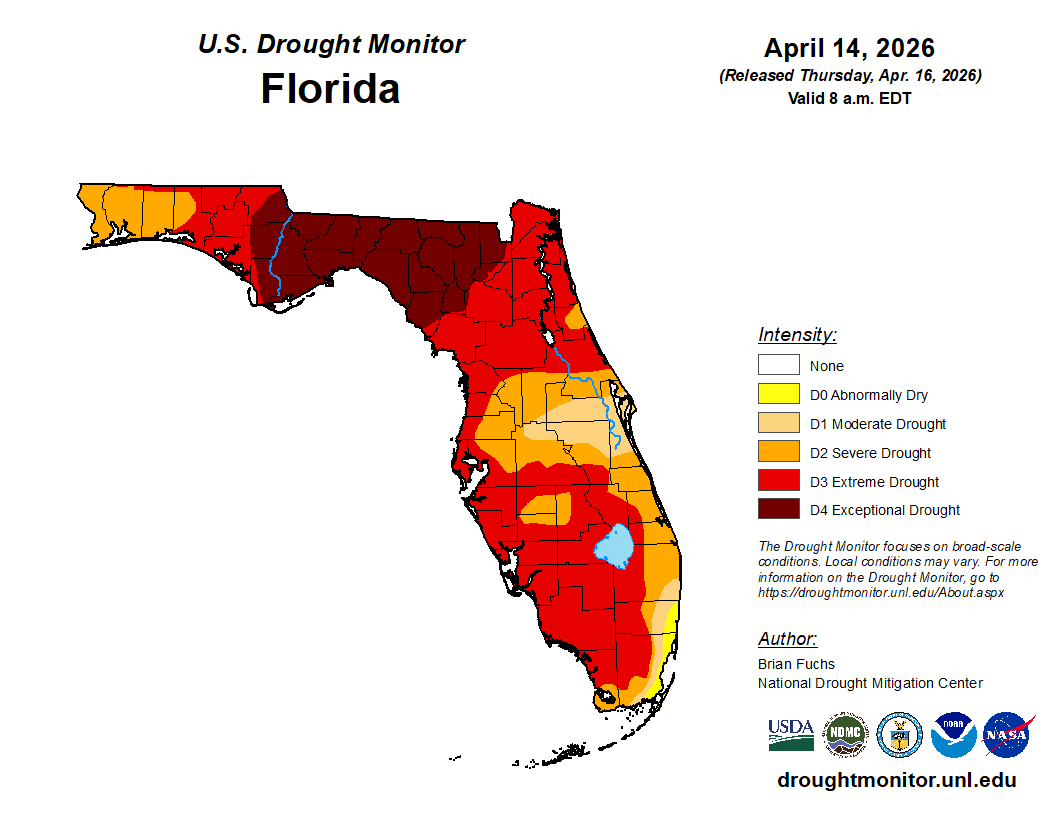
According to the U.S. Drought Monitor map released Thursday, all of Florida is experiencing drought conditions. Columbia County is entirely in exceptional drought, the highest level on the map.
Heather Futch, the county’s UF/IFAS Extension director, told the board earlier in the meeting when it proclaimed April as Water Conservation Month that it was the first time the county had been in that range of a drought since the 1800s.
“One hundred percent of the people in Columbia County are affected by this drought,” Futch said.
According to the Suwannee River Water Management District’s hydrologic conditions report, North Central Florida received an average rainfall of 1.37 inches in March, 69% below the historical average since 1932 of 4.46 inches. That limited amount of rain increased the district’s 12-month rainfall deficit to 19.98 inches, an increase of more than 4 inches from the previous month.
Futch told the commissioners that it’s the seventh-driest March in the area in more than 132 years.
“It’s a big deal,” she said.
The SRWMD’s report added that most of the river gages in North Central Florida finished March in the extremely low (less than 10%) flow range, although the Ichetucknee River was still in the normal (10-25%) range.
The Upper Floridan Aquifer levels ranged from extremely low (less than 10%) to normal (25-75%) during March although the average across the district’s 15-county area was 18%.
There is some hope for help on the horizon. The National Oceanic and Atmospheric Administration’s three-month seasonal outlook suggests there will be above normal precipitation through June to go along with above normal temperatures.